NBBF Appoints Fizdale as D’Tigers Head Coach

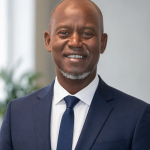
The Nigeria Basketball Federation (NBBF) has officially appointed former NBA coach David Fizdale as the new head coach of Nigeria’s senior men’s national basketball team, D’Tigers, in a strategic move aimed at restoring the team’s global competitiveness and securing qualification for major international tournaments.

Fizdale, a respected basketball figure with extensive NBA coaching experience, takes over with the immediate objective of leading Nigeria toward qualification for the 2027 FIBA Basketball World Cup in Qatar and the 2028 Summer Olympics in Los Angeles.

Speaking on the appointment, Fizdale expressed strong enthusiasm about the opportunity and revealed that former D’Tigers coach Mike Brown played an important role in encouraging him to take on the role.“I’m super excited. I have Mike Brown to thank, who coached the team before. After some good talks and going back-and-forth, we agreed that I was going to try to take the team to qualify,” Fizdale said.

Nigeria has made three Olympic appearances in men’s basketball — London 2012, Rio 2016, and Tokyo 2020 — but is yet to win an Olympic medal. The federation believes Fizdale’s NBA pedigree, leadership experience, and international basketball understanding can help elevate D’Tigers to a new level.

Fizdale previously served as head coach of the Memphis Grizzlies and the New York Knicks, while also holding assistant coaching roles with the Miami Heat, Los Angeles Lakers, and Phoenix Suns. His experience working with elite-level players and championship environments is expected to be a major asset for Nigeria’s national team setup.

Sources indicate that if Nigeria successfully qualifies for upcoming tournaments, the player pool could potentially feature several NBA talents of Nigerian heritage, including OG Anunoby, Onyeka Okongwu, Gabe Vincent, Precious Achiuwa, Josh Okogie, Adem Bona, and Isaac Okoro, among others.This appointment signals a renewed ambition from the NBBF to reposition D’Tigers as a major force not only in Africa but also on the global basketball stage.

With the 2027 World Cup qualifiers and the road to Los Angeles 2028 ahead, expectations will be high as Nigerian basketball fans look forward to a new era under Fizdale’s leadership.For Nigerian basketball stakeholders, this is more than just a coaching appointment

—it is a statement of intent.D’Tigers now have a coach with proven NBA credentials, and the challenge ahead will be translating that experience into sustainable international success.The journey begins now.

Apache is Gone – Stakeholders say Goodbye

Many basketball players were shocked throughout the months of February and March as word spread about the demise of former national team player and seasoned basketball legend who played for defunct team Benin Beads of the 80's and early 90's. Apache (Dominic Osawme Ojehonmon) as he's fondly known by friends around the basketball circle passed away after a brief illness. Over the years after retiring for many years from active playing the basketball legend devoted much of his time to grassroots development working with many other basketball legends to improve basketball development in Edo State and Nigeria at large. He will be sourly missed.

Flyers Fly High in Opener

The Benue Boys, Maktown Flyers in their first BAL Campaign opener started on a high note. No jitters, no fear, just easy cruising and flying by the flyers.

Their first encounter against Ivorian side JCA Kings, tutored by former perennial National Team/Club ABC, Player Stephen Konate. The encounter was close but the Flyers Coached by the duo of Abdulrahman Mohammed and Jeff Varem both household names in Nigerian and African basketball climes, held everything together, not flinching and not losing pace.
The game was led from the beginning to the final whistle by the flyers and the end the closed out the Kings 76 - 68

The NSF Boycott Threat

From Festivals to Funds, From Selection to Systems:

The conversation must go deeper. What we are witnessing is not just administrative friction. It is the exposure of a flawed philosophy that has guided sports in Nigeria for decades — spend heavily on moments, ignore the machinery that creates value. So, let’s confront the uncomfortable questions directly.

1. Why Are We Spending Billions on Events Instead of Building a Sports Economy? A one-week festival can consume billions in:
Logistics
Ceremonies
Accommodation
Media optics
And then it ends.
No continuity.
No reinvestment loop.
No compounding value.
Now imagine redirecting even a portion of that into a Sovereign Sports Wealth Fund (SSWF) — a structured, ring-fenced financial engine designed to:
Fund tier-based competitions (grassroots → academy → semi-pro → elite)
Support multi-sport ecosystems, not just selected disciplines
Provide operational grants tied to performance and accountability
Invest in infrastructure, equipment, and digital systems
Create returns that sustain the system long-term
This is not theory, It is how serious industries operate. You don’t spend your capital on ceremonies. You invest it into systems that produce recurring value.

2. One-Size-Fits-All Leadership Is Structurally Broken
Another hard truth: sports are not the same. Basketball is not athletics.
Athletics is not volleyball.
Volleyball is not rugby. Yet we continue to run them through centralized leadership structures that often:
Lack sport-specific expertise
Lack performance accountability
Lack economic understanding of each sport
The result? Generic decision-making in specialized environments. What should happen instead is simple but powerful:
Decentralized sport commissions
Each sport governed by credible, merit-based leadership
Clear KPIs tied to development, participation, and revenue generation
Transparent evaluation and replacement cycles.
You cannot build excellence with generalized control. You build excellence with specialized leadership and accountability

3. Do These Events Pay Athletes? No.
Is There a Structured Pathway? No.
Let’s strip away the sentiment and deal with reality.
Athletes: Are not paid to participate
Do not have structured contracts tied to the festival
Do not transition into leagues or professional systems after participation.
So what exactly are they participating in? Exposure? Exposure to what? If there is no downstream structure — no leagues, no contracts, no economic opportunities — then exposure becomes another illusion. A real system would ensure: Participation leads to contracts or opportunities Performance leads to mobility within a structured pathway Athletes are part of an economic cycle, not just an event Without that, the festival becomes a temporary gathering, not a career platform

4. The Brutal Truth: The Festival Serves Athletics — Mostly Let’s be honest, even if it is uncomfortable. Historically, the National Sports Festival has been most effective for athletics (track and field) because: It aligns directly with international competition formatsIt allows for measurable performance benchmarking It feeds into Olympic and global qualification systemsFor many other sports?The impact is minimal.Why?Because those sports require:LeaguesClub systemsContinuous competitionTactical and technical development over timeA festival cannot replace that.So yes — for many sports, participation in the festival is symbolic, not structural.And that is why exclusion creates outrage. Because even symbolic relevance has become valuable in a system with so little real structure. 5. The Core Problem: We Mistook Visibility for Value   5We celebrate:MedalsCeremoniesParticipationBut we do not measure:Economic outputAthlete earningsJob creationSystem sustainabilityVisibility is not value.A televised event does not equal development.
A medal does not equal a system.
A festival does not equal an industry. 

6. What a Real System Should Look LikeIf we are serious, the shift must be deliberate and structural:A. Establish a Sovereign Sports Wealth FundSeeded from federal/state allocations + private capitalProfessionally managedTransparent reportingMandated to fund multi-tier competitions and infrastructureB. Build Tier-Based Competition SystemsGrassroots leagues (schools, communities)Academy leagues (structured development)Semi-professional leagues (income generation begins)Professional leagues (full economic participation)C. Commission Sport-Specific LeadershipExperts, not political placeholdersPerformance contractsClear deliverables per sportD. Create Athlete Economic PathwaysContractsTransfersScholarshipsEndorsement pipelinesE. Redefine the FestivalA showcase event, not a lifelineA celebration of existing systems, not a replacement for them Final Thought: From Illusion to IndustryThe current crisis is not a failure.It is an opportunity — if we are willing to see it clearly.The boycott threats, the anger, the confusion…
they are all signals pointing to one undeniable truth:We have built a culture of activity, not a structure of value.Until we:Invest instead of spendStructure instead of gatherBuild pathways instead of momentsWe will continue to recycle the same problems under different headlines.The question is no longer whether the National Sports Festival should include more sports.The real question is:When will we build a system where no sport depends on the festival to exist? 

Nigeria Gains Global Clout

Nigeria has just scored what many will call a “big win” on the global stage. Olumide Oyedeji has been appointed to the Athletes’ Commission of the International Olympic Committee — one of the most influential decision-making platforms in world sport.

Dam Foundation takes on Nigerian Basketball

In what appears as a humanitarian gesture the current Director of the Nigerian Energy Commission, Dr. Mustapha Abdullahi, a former one time Kano, Ahip Basketball player has recently shown keen interest in Basketball Development in and around Nigeria.

You will recall, that the energy commission director recently hosted a major tournament in his home town of Kogi State. He has also been linked to trips all the way to France to support or ladies, D'tigress in their recent campaign in Paris for the FIBA World Cup Qualifiers, scheduled to take place in September 2026.

This week the Director started what speculators suggest is a series of Zonal tournaments starting with the Northwest and in the city of Kano, where he grew up and came into contact with the game. While basketball pundits and sports political analysts say this is a rouse and a ploy, a campaign strategy in collaboration with the outgoing board, which is desperately trying to cling to power by all means. Rumors' and allegations has it that some sort of alleged deal between the incumbent, Alh. Musa Kida and Dr. Mustapha Abdullahi, is the major reason why these tournaments are even taking place.

Well! whichever or whatever it is, be rest assured, that kids around the country are in a frenzy and are going to enjoy every last bit of the event, especially with the largesse of a winners prize. We wait to see what the future holds.

Saying Goodbye to Lawan Garba

SAYING GOODBYE TO LAWAN GARBA

Very few players, fans and officials today in Basketball Nigeria know Lawan Garba, "Larry" the basketball player. Most people know him as the Director of Sports Bauchi State Sports Council or as Permanent Secretary in the Ministry of Youth & Information Bauchi State.

AN OPEN STATEMENT TO THE NIGERIAN BASKETBALL COMMUNITY: STOP BEGGING TO BE HEARD & START BUILDING

I have been around this game for a long time. Over the last 30 years, basketball has taken me far and wide. I have seen how systems are organized, governed, funded, and sustained. I have been exposed to development frameworks built on long-term thinking, shared responsibility, and measurable outcomes. So forgive me when I ask certain questions.

They do not come from ignorance, but from experience. Aside from the Olympics and NBA, there is no level of basketball in Nigeria, that I have not participated in, worked with, or been part of in one form or another. In recent years, I deliberately chose to step away from Nigerian basketball — not out of bitterness, but clarity. At this point, I am entitled to say: I have seen it all, and I have heard it all. Which brings me to the uncomfortable questions we continue to avoid.

First: No matter the outcome of the NBBF elections—if they even take place—we will still wake up the next day with the same responsibility: to develop basketball for Nigeria and its stakeholders. So the honest question is this: will the election, or whoever emerges, fix the structural problems of Nigerian basketball? History suggests otherwise.

Second: What we currently practice is what I call optics-driven or political basketball. Yes, there are camps, clinics, tournaments, scholarships, and “giving back” initiatives. But we have failed to clearly articulate what kind of basketball system we want to run, how its components connect, and how value flows through it. What we have instead is entitlement, value extraction, sponsorship dependency, subsidies, and what Nigerians call stomach infrastructure. In plain terms, this is a charity-based system. Charity does not build ecosystems. So how exactly is this model expected to grow in a way that delivers real value to the majority of stakeholders?

Third: Aside from a few individuals experimenting with equipment and technology over the past three decades, our basketball culture has been built on expectations, noise, and visibility campaigns that are expensive, outlandish, and largely unproductive. Visibility without structure is not development. So how do we turn noise into systems, and hope into institutions?

Fourth: Government and its appointed administrators have mandates and agendas that are known only to them. The recurring assumption that we can somehow compel these actors to execute what stakeholders believe is best for the sport ignores political reality. The real question is not what should they do, but why do we believe they will? Finally: We operate in a country where systems rarely reform themselves. Electricity remains unreliable. Security is uncertain. Public institutions serve themselves more than citizens. Yet, against all evidence, we continue to believe that the same structures that failed us will suddenly save us — that audacity of hope will override decades of proof. So I ask plainly: how do we expect the same system that broke Nigerian basketball to fix it?

I may sound negative. I may appear obstinate. But this is not pessimism — it is honesty. Do the research, speak to those who have actually built functioning systems. The truth is simple and unavoidable: the only way to build a working basketball system is for the people most affected by its failure to fix it themselves. I am here. I have been here. I remain available for those bold enough to have this conversation seriously. Everything else is noise.

The Danger of Pathway Blindness:

The Danger of Pathway Blindness

"At the core of effective coaching is alignment—aligning skills, abilities, mindset, and understanding with a defined pathway. A coach who trains without understanding the pathway is merely keeping people busy.
A coach who understands pathways is building futures."

As long as you are being coached, led, or trained by someone who is not familiar with pathways, you are being set up to fail—regardless of how passionate, loud, or well-intentioned that person may be. Without pathways: There is no direction Without direction, there is no plan Without a plan, there is no future This is how dead ends are created—when people are pushed forward without knowing where forward leads. 

In Africa, this failure is systemic. We train without ecosystems. We coach without career ladders. We develop talent without exits, transitions, or post-development opportunities. As a result, frustration replaces fulfillment, and potential turns into regret.

Africa’s Leadership Crisis Is a Pathway Crisis, Africa does not lack talent. Africa does not lack passion. Africa does not lack effort. What Africa lacks—across sports, governance, education, and institutions—is pathway literacy. We celebrate beginnings but abandon continuity. We create programs without futures. We motivate people without destinations.

Leadership in Africa must evolve from positions of authority to roles of responsibility—responsibility for designing, protecting, and sustaining pathways for those we lead. EYDA, BAN, GLN, CUIB71, ALLINSPORTS&ENTERTAINMENTPLC

Why Nigeria Doesn’t Make Financial Sense

This article is not a political attack on any individual, party, or group. It is a structural analysis of how systems function — or fail — within Nigeria.

Let me say this clearly before anyone misunderstands me: This is not an attack on Nigeria or Nigerians. It is an honest observation from a systems and business perspective.

Nigeria is one of the few places where things that work perfectly elsewhere fail consistently — not because they are impossible, but because they are poorly structured.

Take something as simple as domestic travel. A one-way flight from Kano to Lagos (about 1,400km) costs roughly ₦100,000, in a country with low disposable income and no efficient alternatives like rail or mass transit.

Education tells the same story. Many parents pay over ₦500,000 per year for private secondary schools, not for luxury, but because public education has collapsed. This is not choice — it is economic pressure.

For decades, Nigeria exported crude oil, refined it abroad, and sold it back to citizens at dollar prices — despite the oil being extracted locally. Nigerians earning in naira paid global prices for their own resources.

In many places, there is no pipe-borne water, yet people receive estimated water bills. There is no stable electricity, yet consumers are forced to pay for meters or charged estimated bills. Healthcare and welfare systems barely exist.

Telecommunication services reflect the same pattern: data sold as “₦1,000 for 30 days” that can disappear in hours, no transparency, and no accountability.

Since 1999, insecurity has become a constant reality — killings, kidnappings, displacement — yet governance proceeds as if this is normal.

Despite all this, taxes continue to increase, without basic services to justify them. Sports even shows how unnecessary this dysfunction is. Billions are spent yearly on travel, estacodes, and tournaments, yet a fraction of that investment could build sustainable leagues, create jobs, and make Nigeria a global sports force.

So I ask a simple question: how will this country succeed? Many of us focus on tribe, religion, or region, blaming one another. But the truth is uncomfortable and simple: Nigeria is not poor — it is poorly structured.

The country does not lack resources, talent, or potential. What it lacks are coherent systems, ethical pricing, and value-based governance. Across sectors — aviation, education, energy, healthcare, telecommunications, security, and sports — the same pattern repeats:

• High costs
• Low value
• Risk pushed to citizens
• No accountability

Until Nigeria shifts from extraction to value creation, from ambiguity to transparency, and from short-term gains to long-term systems, the country will continue to struggle. Nigeria, Nigerians, I come in peace.